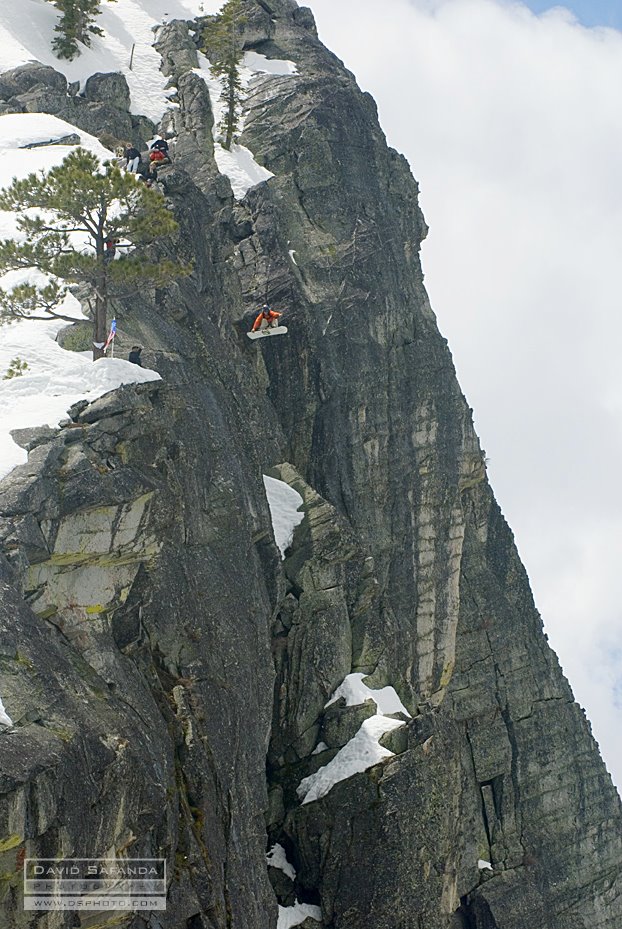
Jeezum Crowbar! That's Chris McNamara leaping off Lover's Leap in California, parachute (hopefully) at the ready. Photo by David Safanda. More photos, explanation and discussion at Supertopo.com.

 Spring may be my favorite season in Rocky Mountain National Park. It's when some of the Park's best routes come into shape and the deep mantel of snow transforms ordinary climbs into beautiful and challenging outings. Yesterday, Greg Sievers and I climbed the Spiral Route on Notchtop. It's a pleasant mountaineering route in summer, with some 5.4 rock and scrambling, gaining a wild summit ridge. A storm the day before had brought cold temps, very high winds and a shot of snow to the Park, and the clouds and gusty wind lingered as we skied toward Notchtop. It wasn't looking good: The rime-covered peak looked like a tower straight out of B.C. or southeast Alaska and gusts were knocking me off my skinny skis. But the forecast was excellent, so we kept the faith.
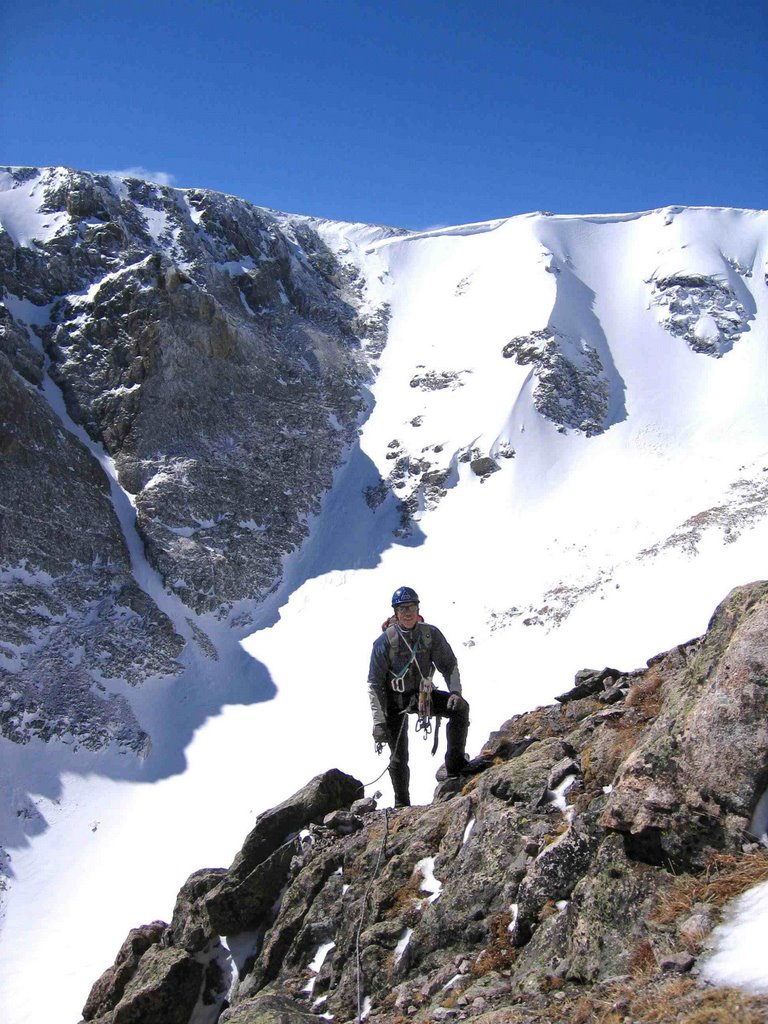 By the time we started up the first rock pitches, the sun was out but the wind was still gusting. As we spiraled around the tower into the lee, the day got warmer and the clouds vanished. Crampons on, tools out, we entered the upper gully and slogged up some nasty unconsolidated snow to the final headwall.
 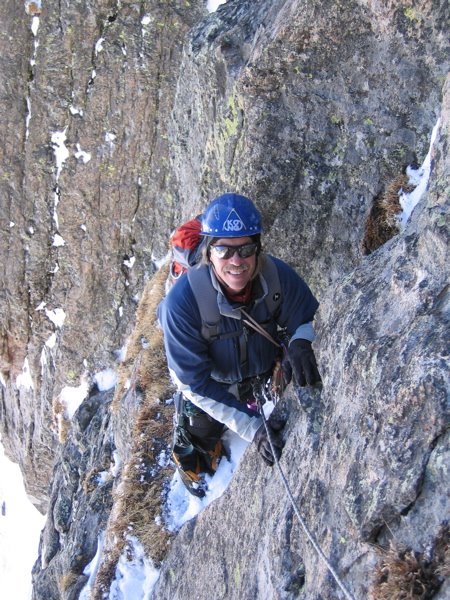 We chose a more direct line than the one I had followed before in summer, and it probably had some 5.7 or 5.8 rock. l got us halfway up before running out of rope and gear, and Greg got the crux, a couple of sketchy bare-handed moves on wet rock. All in all, a great climb in splendid alpine surroundings.
 Once we crested the ridge, we could see their tracks right down the middle of the Ptarmigan Glacier. As we were rapping off, we heard a roar and watched all of the new snow slide off the glacier, obliterating the skiers' tracks about two and a half hours after they left them. With cornices looming over our own exit gully, we raced down as fast as we could and were happy to reach the skis safely and point them toward home.
 There may be a decline in the number of climbers registering for Mt. Rainier and other big peaks, but popular mountain routes are still all too popular. As the spring alpine season gets under way in Colorado, here's a reminder: This pic was taken in early June of 2004, looking down the south couloir on Mt. Arapahoe in the Indian Peaks. Take a number!
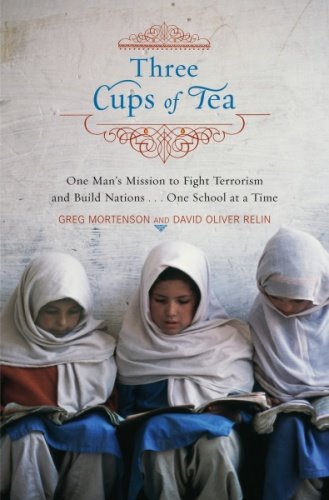 I have just about finished the new book Three Cups of Tea, by David Oscar Relin and Greg Mortenson, director of the Central Asia Institute, and I can safely say: Buy this book. Starting with nothing but a desire to help the Balti people in northern Pakistan who had helped him, Mortenson has built more than 50 schools in Central Asia and has done far more to win the "war on terrorism" than Washington has done by spending billions of dollars and sacrificing many thousands of lives. I feared either a dry or sensationalistic account in Three Cups of Tea, but, knowing Mortenson a bit, I shouldn't have worried. In much the same gentle but persistent way that Mortenson earned the trust of his clients in Asia, he formed a two-year collaboration with his co-author that has produced an engaging tale. As a storyteller, Relin has an odd method of mixing past-tense narration with present-tense quotes from his interviews, but Three Cups of Tea is nonetheless a page-turner. Although I already knew much of the story, the book renewed my amazement at Mortenson's dedication (sleeping for a year in a car in the Bay Area despite a good job, in order to save money to build his first school) and at the succession of serendipitous meetings with just the people in both America and Pakistan that could most help him advance his mission. Best of all was Relin and Mortenson's revealing and sympathetic look at the various communities where Mortenson works. I wish certain people in Washington would read this book and take some of its lessons to heart.
 Raise a glass to Stephen Perry, who just completed a 121-day effort to bag all 284 of the Scottish Munros in winter conditions, without any motorized assistance other than ferry rides. What's a Munro? It's any peak in the Scottish Highlands higher than 3,000 feet. What's so hard about climbing a 3,000-foot peak? This is Scotland. The weather is just plain awful in winter (it's pretty bad in summer too). Perry's online log of the journey gives a sense of the difficulties, from beginning to end: